Alone in the Arena: The Quiet Crisis of Playing VR's Biggest Games by Yourself
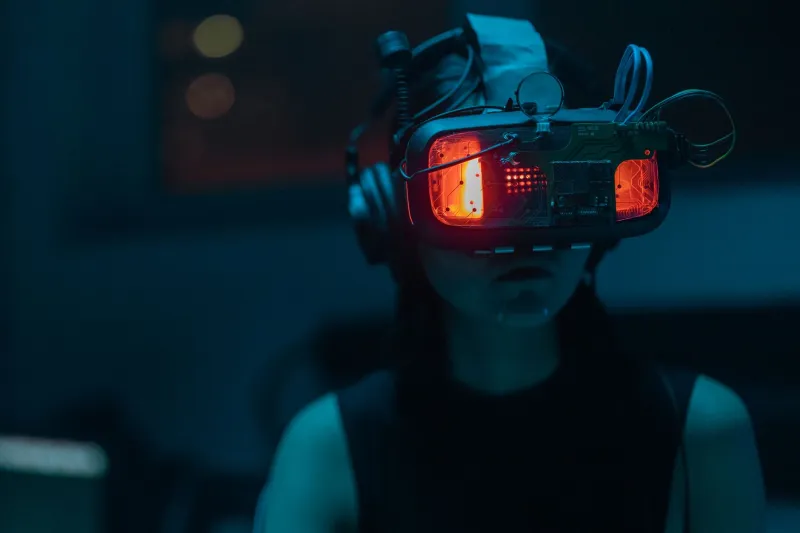
Picture this: it's a Tuesday night, your friends are busy, and you strap on your headset ready to dive in. You boot up one of VR's most-hyped multiplayer titles, get dropped into a lobby, and... it's just you. The game technically works. The mechanics are there. But something feels off — like showing up to a party where you're the only guest. The decorations are still up, the music is playing, and yet the whole thing feels weirdly hollow.
That feeling has a name, and it's becoming one of VR gaming's most undertalked problems.
Built for the Squad, Awkward for the Solo
A huge chunk of VR's most celebrated titles were designed from the ground up with social play in mind. Games like Rec Room, VRChat, and Population: One didn't just add multiplayer as a feature — they made it the entire point. The worlds, the progression loops, the humor, the chaos — it all assumes you've got at least one friend along for the ride.
And honestly? That's not a bad design philosophy when it works. VR multiplayer at its best is genuinely unlike anything else in gaming. The spatial presence of standing next to another player, making eye contact through an avatar, or high-fiving someone across the country — it creates connections that flat-screen games just can't replicate.
But here's the catch: not everyone has a consistent VR crew. A lot of players in the US picked up headsets during the pandemic boom and are now playing in social circles where they're the only one with a headset. When you're the lone VR enthusiast in your friend group, games built entirely around co-op or competitive multiplayer can start to feel like a joke you're not in on.
The Design Choices That Leave Solo Players Out
It's worth asking why so many VR developers leaned so hard into social-first design. Part of it is practical — VR's install base, while growing, is still relatively small compared to traditional gaming. Developers betting on the medium's future saw social experiences as the killer app, the thing that would convince people VR was worth the investment.
There's also something about the technology itself that screams "share this." When you're flailing around your living room, laughing out loud, or literally ducking behind cover, the experience feels performative in the best way. It's designed to be witnessed.
The problem is that performative design doesn't always translate to meaningful solo play. A lot of VR games lean on other players to generate the unpredictability, humor, and emotional stakes that make a session memorable. Strip those players away, and what you're left with can feel like a theme park ride with no one else on it — technically functional, but missing the soul.
Game modes built around coordination become tedious chores. Worlds designed for spontaneous social interaction feel like ghost towns. And progression systems that reward group play leave solo players grinding through content that was never really meant for them.
The Titles That Actually Get It Right
Here's the good news: not every VR developer forgot solo players exist. A growing number of titles have figured out how to deliver genuinely immersive, emotionally resonant experiences that don't require a single other human being.
Lone Echo 2 is probably the gold standard. It's a narrative-driven sci-fi adventure that uses VR's physical presence to make you feel like you're actually inhabiting a world, not just viewing it. The story gives you something to care about, the zero-gravity movement is intuitive and satisfying, and the whole thing is built around a single-player experience that never once makes you wish you had a buddy along.
Asgard's Wrath 2 takes a different approach, offering a sprawling RPG with dozens of hours of content. It's proof that VR can support deep, complex solo gameplay without sacrificing the immersive edge that makes the medium special.
Even on the shorter end, games like Pistol Whip and Synth Riders thrive as solo experiences because they're built around personal performance and self-improvement. You're not competing against other players — you're competing against yourself, chasing better scores and cleaner runs. That's a loop that works perfectly without a squad.
The Psychology of Playing Alone in VR
There's a psychological layer to this worth unpacking. VR is an inherently immersive medium — the whole point is that you're in the experience, not watching it from a distance. That level of presence can actually make social voids feel more pronounced than they would in a traditional game.
If you're playing a flat-screen multiplayer game alone, you might feel a little bored. But in VR, where the design is constantly signaling "this is a shared space," playing solo can trigger something closer to genuine loneliness. The technology is too good at making you feel like you're somewhere real — and empty spaces feel emptier when they're supposed to be full.
On the flip side, that same psychological presence is what makes a well-crafted solo VR experience so powerful. When a game is designed to make you the protagonist — not you-and-your-friends — the immersion becomes deeply personal. You're not splitting emotional bandwidth with teammates. You're fully inside the story, the world, the moment.
What Developers Need to Hear
The VR market is maturing, and player demographics are diversifying. The days of VR being a novelty for early adopters who all happened to know each other are fading. More and more people are picking up headsets solo, playing on their own schedules, in their own spaces — and they deserve games that were built with them in mind.
That doesn't mean multiplayer VR needs to go away. The social experiences that VR enables are genuinely remarkable and worth developing. But there's a real opportunity — and a real audience — for developers willing to invest in single-player VR design with the same seriousness they bring to their multiplayer modes.
Robust AI companions, narrative depth, personal progression systems, and world-building that rewards exploration rather than interaction — these are the tools that turn a solo VR session from a consolation prize into the main event.
The Bottom Line
VR gaming has an incredible future ahead of it, and multiplayer experiences are a huge part of why. But the medium doesn't have to choose between social and solo — the best games find ways to serve both. Until more developers make that investment, solo players are going to keep strapping on their headsets and feeling like they showed up to the wrong party.
If you're one of those players, the titles are out there — you just have to know where to look. And if you're a developer reading this? There's a whole audience of solo adventurers ready to ignite their reality, headset and all, no squad required.