Corporate Payday, Creative Drought: How Enterprise VR Is Quietly Gutting Gaming's Future
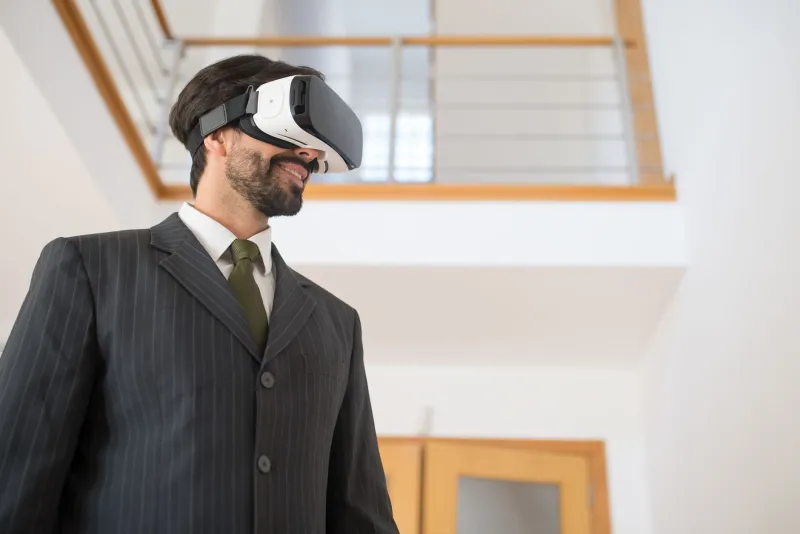
Picture the pitch meeting. A scrappy VR studio — the kind that built its reputation on a genuinely inventive game that reviewers loved and players talked about for years — sits across from a procurement officer at a Fortune 500 company. The contract on the table is for a workplace safety training simulation. It's not glamorous. It will never get a review on IgnisVR. Nobody will stream it on Twitch.
But it pays $800,000, comes with a three-year maintenance contract, and requires roughly half the creative risk of shipping a consumer game into an uncertain market.
That meeting is happening constantly, all over the industry. And the cumulative effect on VR gaming — the kind we actually care about — deserves a much more honest conversation than it's getting.
The Enterprise Pivot Is Real and It's Accelerating
Let's be clear about the scale of what's happening. The enterprise VR market — corporate training, surgical simulation, military applications, industrial safety, real estate walkthroughs — is worth billions and growing fast. The US Department of Defense alone has poured enormous resources into VR and mixed-reality training contracts, with deals that dwarf the budgets of even well-funded consumer VR titles.
For studios that have spent years scraping by on game sales and hoping for a platform-featured slot, the enterprise market looks like a lifeline. And in many cases, it is. Studios that would have shuttered are still operating because they landed a corporate contract. Developers who might have left the industry entirely are still making VR experiences because their employer found a steadier revenue stream.
That's not nothing. Keeping VR talent employed matters.
But talent that's spending its days building OSHA compliance training modules isn't building the next Half-Life: Alyx. And that's where the math starts getting uncomfortable.
What Gets Lost When the Suits Show Up
The creative DNA of VR gaming's most celebrated titles — the games that convinced skeptics the medium was worth taking seriously — came from studios willing to take genuine risks on novel interaction models, experimental narratives, and experiences that had no real precedent in flat-screen gaming.
Enterprise VR work is almost definitionally the opposite of that. Corporate clients want reliability, repeatability, and measurable outcomes. They want simulations that behave consistently across hundreds of deployments, that can be updated without breaking anything, and that justify their cost to a CFO who doesn't know what a locomotion system is. The creative brief for a warehouse training simulation isn't "surprise us."
Developers who spend years in that environment — optimizing for compliance checklists rather than player delight — don't just lose time. They risk losing the instincts that make great games. The muscle memory of designing for curiosity, for surprise, for the kind of moment-to-moment engagement that keeps a player in the zone — that atrophies when you're not using it.
Talk to indie VR developers who've watched colleagues make the enterprise jump and you'll hear a version of the same story: the money's better, the stress is lower, and something harder to name has quietly gone quiet.
The Funding Funnel Problem
There's a structural issue here that goes beyond individual studio decisions. When enterprise VR becomes the reliable revenue model and consumer gaming remains the risky one, it shapes where investment flows — not just within studios, but across the entire ecosystem.
Venture capital and private equity that might have funded ambitious consumer VR projects increasingly flows toward enterprise platforms with predictable B2B revenue. Accelerators and incubators that once championed weird, experimental VR games now talk a lot about "enterprise readiness" and "vertical market applications." The infrastructure that would help bold consumer VR ideas get made is quietly reallocating toward safer bets.
Meanwhile, the consumer VR market — already challenged by hardware costs and a still-developing install base — gets less of the creative energy it needs to grow. It's a self-reinforcing cycle: fewer great consumer VR games means slower headset adoption, which means a smaller market, which makes enterprise contracts look even more attractive by comparison.
The Counterargument Deserves a Fair Hearing
Let's steelman the other side, because it's not a frivolous position.
Enterprise VR revenue keeps studios alive long enough to do consumer work. Some of the most sophisticated VR interaction research happening right now is being funded by military and medical contracts — and those technical advances eventually find their way into gaming. The haptics research, the eye-tracking work, the fidelity improvements in spatial audio — a lot of it has enterprise fingerprints on it.
And frankly, some of the enterprise applications are genuinely impressive pieces of software. A surgical training simulation that helps medical students practice procedures that would be impossible to replicate otherwise isn't a waste of VR talent — it's a legitimate use of a powerful medium.
The problem isn't enterprise VR existing. The problem is enterprise VR crowding out consumer gaming when the industry needs creative firepower most.
What a Healthier Balance Looks Like
The studios navigating this best are the ones treating enterprise work as a funding mechanism rather than an identity. They take the contracts, do good work, keep the lights on — and ring-fence a creative team working on consumer projects that stay insulated from the enterprise mindset. It requires discipline and real organizational commitment, but it's possible.
Platforms can help too. Apple, Meta, Sony, and Valve all have financial incentives to see great consumer VR games exist — they sell the hardware those games run on. More aggressive revenue-sharing programs, development grants, and marketing support for ambitious consumer titles would make the enterprise pivot less economically inevitable for studios that would rather be making games.
Because here's the thing: the enterprise market will be fine. Corporate training budgets are not going away. The military is not going to stop funding simulation research. That world will keep chugging along with or without the most creative VR minds in it.
Consumer VR gaming, on the other hand, is still fragile enough that it needs those minds. The next game that makes a million people put on a headset for the first time isn't going to come from a warehouse safety module. It's going to come from a team that still believes in the weird, ambitious, potentially unprofitable bet.
We should probably make sure someone's still funding those bets.