No PC Required: How Standalone VR Headsets Are Finally Making Virtual Reality a Living Room Staple
For years, VR carried a reputation as the coolest thing you'd never actually own. The tech was real, the experiences were genuinely mind-blowing, and then you'd look at the price tag — not just for the headset, but for the gaming rig powerful enough to run it — and suddenly your wallet would have a very serious conversation with your enthusiasm. That story is changing fast, and 2024 might be the year it changes for good.
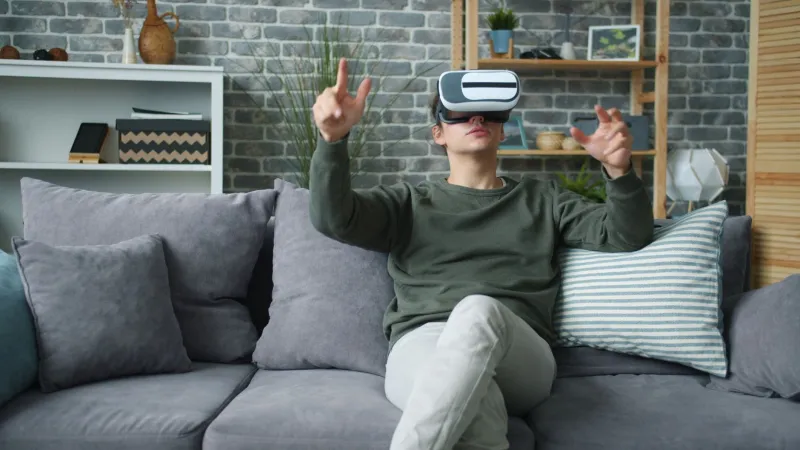
Standalone VR headsets — devices that pack all their processing power into the headset itself, no console or gaming PC required — have quietly matured into something worth getting genuinely excited about. We're not talking about the underpowered, blurry-screened novelties of a few years back. Today's standalone systems are delivering experiences that would have required a high-end desktop setup just two or three years ago.
What's Actually Different This Time Around
The biggest shift isn't just hardware specs, though those have improved dramatically. It's the total cost of entry. When someone can pick up a capable standalone headset for around $300 to $500 and be playing immersive VR titles within minutes of unboxing, the conversation changes entirely. Compare that to the old equation — $400 for a PCVR headset, plus $1,000 or more for a compatible gaming PC — and you start to understand why adoption numbers were always frustratingly flat.
Meta's Quest lineup has been the most visible player in this space, with the Quest 3 landing in late 2023 and carrying serious momentum into 2024. Its Snapdragon XR2 Gen 2 chipset delivers noticeably crisper visuals and smoother performance than its predecessor, and the mixed reality passthrough capabilities have opened up a whole new category of games that blend virtual objects with your actual physical space. But Meta isn't the only name in the room anymore.
PICO, a brand owned by ByteDance and gaining real traction in the US market, has been pushing competitive hardware at aggressive price points. And with PlayStation's continued investment in PSVR2 — which, while tethered to a PS5, still dramatically lowers the barrier compared to PCVR — the standalone-adjacent ecosystem is broader than it's ever been.
Developers Are Noticing — And Designing Differently
Here's something that doesn't get talked about enough: when the install base grows, developers actually show up. For a long time, VR suffered from a chicken-and-egg problem. Not enough users meant not enough games, which meant not enough users. Standalone headsets are cracking that cycle open.
Indie studios in particular have gravitated toward the Quest platform because the development tools are accessible and the storefront is active. Games like Walkabout Mini Golf, Pistol Whip, and Among Us VR found enormous audiences on standalone hardware — audiences that simply didn't exist in the PCVR space. Developers have started designing with standalone-first in mind, optimizing for the hardware constraints rather than treating standalone as a downgrade from a PC version.
The result is a growing library of titles that feel native to the platform rather than ported down from something more powerful. That distinction matters more than people realize. A game built for standalone VR tends to run better, feel more polished, and offer a more cohesive experience than one that's been scaled back from PC specs.
The Performance Gap Is Narrowing — Seriously
Skeptics love to point out that standalone headsets can't match the raw graphical output of a high-end PCVR setup, and technically, they're right. But that framing misses the point. For the vast majority of players, the question isn't 'does this look as good as a $3,000 rig?' It's 'does this look and feel good enough to be genuinely immersive?' In 2024, the answer to that second question is increasingly yes.
Resolution improvements, better lens technology, and smarter rendering techniques like dynamic foveated rendering — which concentrates processing power where your eyes are actually focused — have closed the perceived quality gap significantly. Throw in 120Hz refresh rates on premium standalone devices and hand tracking that's become genuinely reliable, and the experience starts feeling less like a compromise and more like a legitimate platform in its own right.
The Living Room Angle Changes Everything
One underappreciated factor in standalone VR's rise is pure social dynamics. When a VR headset requires a dedicated gaming PC and a cleared-out room with sensors mounted in the corners, it becomes a solitary, setup-heavy hobby. When it's a wireless device you can grab off the shelf, hand to a friend, and have them playing in two minutes, it becomes something you actually show people at parties.
That social visibility is a huge driver of adoption. Word of mouth matters enormously in gaming, and standalone VR has become the format that actually gets passed around at family gatherings and game nights. People who would never describe themselves as 'VR enthusiasts' are putting on a Quest 3 to play Beat Saber or take a virtual tour of a national park, and some percentage of those people are buying their own headsets shortly after.
Should You Jump In Now?
If you've been sitting on the fence about VR, 2024 is a genuinely compelling time to make the leap — provided you go in with realistic expectations. Standalone VR is not going to replace your gaming PC or your TV setup. The library, while growing, still can't match the breadth of traditional gaming platforms. And yes, wearing a headset for extended sessions still takes some getting used to, no matter how much comfort engineering goes into the hardware.
But as a first step into immersive gaming? As a platform that lets you experience spatial audio, full-body presence, and genuinely novel gameplay mechanics without selling a kidney to fund the setup? Standalone VR in 2024 is the real deal. The ignition point for mainstream adoption has been a long time coming. It feels like we're finally there.