Mirror, Mirror in the Headset: Why VR Avatars Still Feel Wrong — and the Tech Racing to Fix It
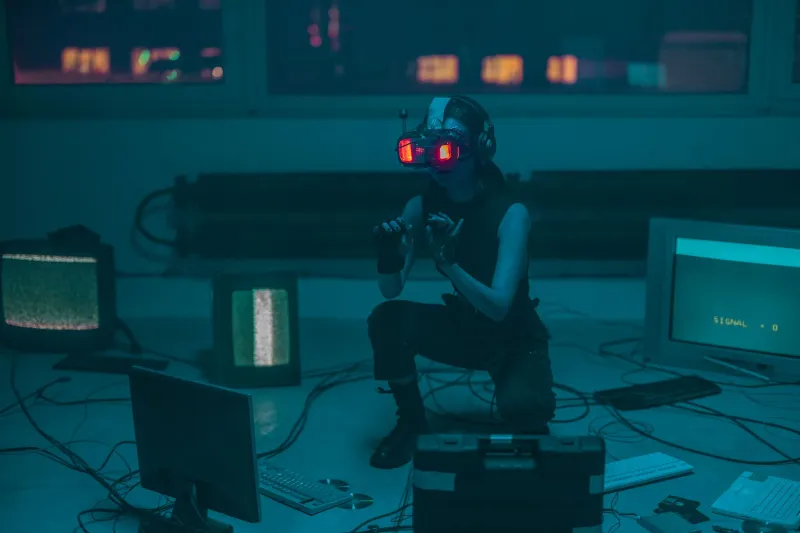
You spend twenty minutes in a VR social app carefully customizing your avatar — the hair, the jacket, the little details that are supposed to make it you. Then you start talking to someone, and your digital hands flap around like you're directing air traffic. Your head bobs strangely. Your eyes stare straight ahead like a mannequin who just got some bad news. Whatever sense of presence you had a minute ago quietly packs its bags and leaves.
Welcome to the uncanny valley of VR avatars. It's a real thing, it affects almost every headset user at some point, and it turns out it matters a whole lot more than developers initially expected.
What the Uncanny Valley Actually Means Here
The term "uncanny valley" originally described the discomfort people feel when a humanoid robot or CGI character looks almost human but not quite. That slight wrongness triggers something primal — your brain registers the mismatch and flags it as deeply uncomfortable.
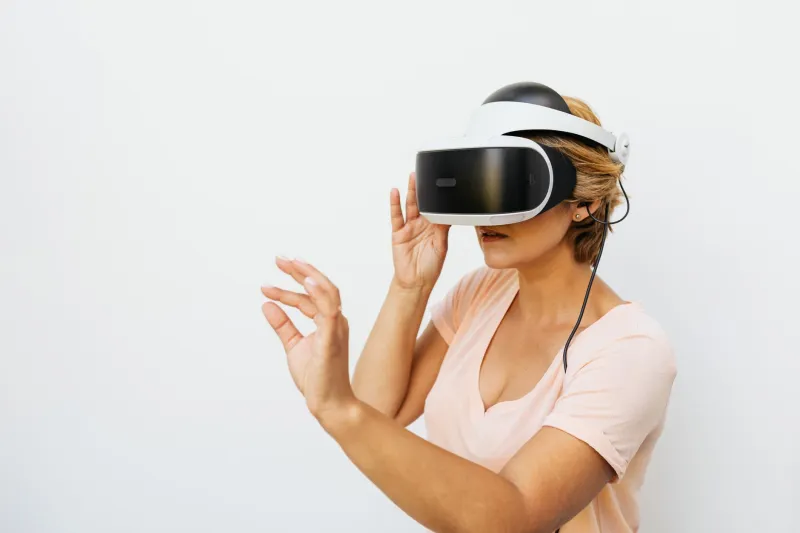
In VR, the effect shows up differently. Your avatar doesn't have to look photorealistic to fall into the valley. It just has to move wrong. When your physical gestures don't translate cleanly into your virtual body — when there's latency, missing joints, or a face that doesn't react to your actual expressions — players report feeling disconnected, self-conscious, and sometimes genuinely unsettled.
Researchers studying social VR environments have found that avatar fidelity directly impacts how willing people are to engage authentically with others. When your virtual self feels like a puppet rather than an extension of your body, you tend to hold back. You talk less, gesture less, and generally behave more like someone wearing a costume than someone living inside a world.
The Tracking Gap Nobody Warned You About
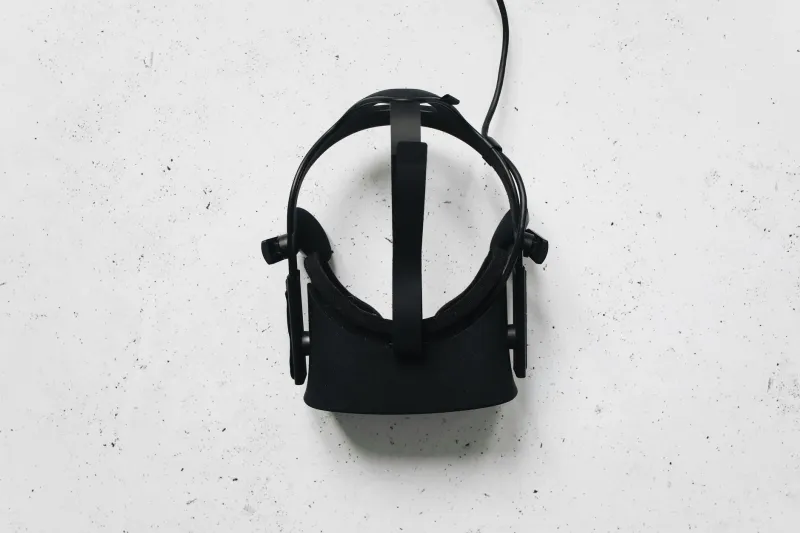
Here's the core technical problem: most consumer VR headsets track three points — your head and your two hands. That's it. Your shoulders, elbows, hips, knees, and feet are all being guessed at by software doing its best impression of a human skeleton. Some of that algorithmic guesswork is genuinely impressive. A lot of it isn't.
The result is avatars that do things your actual body would never do. Arms that clip through torsos. Legs that slide across the floor during locomotion. A torso that pivots like a tank turret when you turn your head too fast. Players who've spent any serious time in VR multiplayer know the look — and they know it breaks immersion fast.
Full-body tracking solutions do exist. Systems using additional tracker pucks placed on the feet and hips can dramatically improve avatar accuracy, and the difference in social VR spaces like VRChat is immediately noticeable. But those setups add cost, setup complexity, and a tangle of hardware that most casual users aren't willing to deal with.
Eye-Tracking Changes Everything (Seriously)
If there's one technology that researchers and developers consistently point to as the most transformative for avatar realism, it's eye-tracking. And the reason comes down to something surprisingly simple: humans are extraordinarily good at reading eyes.
We clock where someone's gaze is pointed within milliseconds. We notice when eye contact breaks, when someone glances away mid-sentence, when their pupils dilate. In traditional VR, avatars either have eyes locked in a fixed forward stare or they animate based on crude head-orientation estimates. Neither is convincing. Both are unsettling.
Headsets with integrated eye-tracking — like the PlayStation VR2 and the Meta Quest Pro — can render avatars whose eyes actually move in sync with the wearer's real gaze. Developers who've built social experiences around this capability consistently report the same thing: it changes how people treat each other. Players make actual eye contact. Conversations feel more natural. The social dynamics shift in ways that are hard to quantify but immediately obvious to anyone in the room.
One indie developer working on a social VR project described the shift this way: when they enabled eye-tracking in early playtests, players spontaneously started having longer, more personal conversations. The avatar felt inhabited rather than operated. That single change — eyes that actually look at things — moved the needle more than any visual upgrade they'd made.
The Behavior Piece Nobody Expected
Here's where things get genuinely fascinating: realistic avatars don't just feel better. They change how people act.
Studies in social psychology have documented what's sometimes called the Proteus Effect — the tendency for people to behave in ways that match their avatar's appearance. Give someone a tall, imposing avatar and they tend to negotiate more aggressively. Give them an avatar that looks like a fitness model and they exercise more in real life afterward. The digital self has a feedback loop with the physical one.
More accurate movement fidelity amplifies this effect. When your avatar mirrors your actual body language, you become more invested in how that body presents itself. Players with high-fidelity avatars report feeling more accountable for their behavior in social spaces. The distance created by a janky, disconnected avatar — that "it's just a game" psychological buffer — shrinks considerably.
For developers building social platforms, that's a double-edged sword. More authentic avatars create more authentic interactions, which can mean more genuine community building. But it also means more genuine conflict, more personal stakes, and more situations where the emotional weight of VR social dynamics starts to approach real-world intensity.
What's Actually Getting Better
The good news is that the gap is closing, and it's closing faster than most people realize.
Meta's Codec Avatars project has been quietly pushing toward photorealistic avatar reconstruction using headset-mounted cameras, and while the full version requires research-grade capture setups, the underlying technology is filtering down into consumer products. Apple Vision Pro's Persona feature — despite its early "floating head" criticism — represents a serious attempt to reconstruct a user's actual face in real time.
On the motion side, machine learning models are getting dramatically better at inferring full-body position from limited tracking data. Newer algorithms can make educated guesses about foot position, hip rotation, and shoulder angle that are close enough to feel right most of the time. It's not perfect, but it's a long way from the flailing marionettes of five years ago.
Standalone headsets are also starting to incorporate more sensors per device, quietly expanding what can be tracked without additional hardware. The trajectory is clear: within a few hardware generations, the three-point tracking limitation that defines most of today's consumer VR is likely to feel as dated as black-and-white monitors.
Why It Matters More Than You Think
It's tempting to treat avatar fidelity as a cosmetic issue — nice to have, not essential. But the research and the developer experiences tell a different story. How accurately your virtual self represents your physical self shapes everything from how comfortable you feel in social spaces to how you treat other players to how deeply immersed you get in single-player experiences.
The uncanny valley in VR isn't just aesthetically annoying. It's a genuine barrier to the kind of presence that makes virtual reality actually transformative rather than just technically impressive. Closing that gap isn't a luxury feature — it's arguably the most important unsolved problem in consumer VR right now.
The technology to fix it exists. It's getting cheaper. And the developers who've already implemented pieces of it know what's on the other side. When your virtual self finally moves like you, something clicks into place that changes the whole experience. That moment is coming. It just hasn't shown up in everyone's living room yet.