Why Nobody's Watching: The Invisible Wall Between VR Gaming and Streaming Stardom
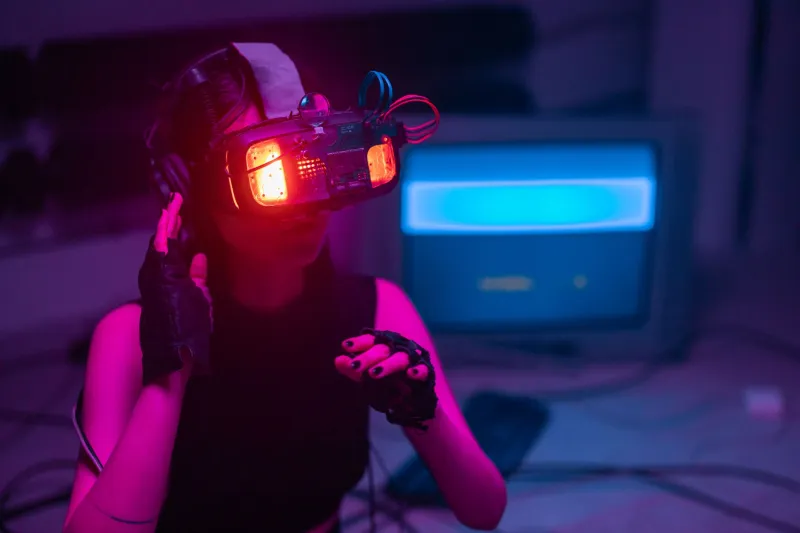
Pull up Twitch on any given Friday night and you'll see the usual suspects dominating the top categories — battle royales, MOBAs, the occasional cozy farming sim having its moment. Scroll far enough and you might stumble across a VR category. Might. The viewer counts are modest, the streamers are often broadcasting to crowds that could comfortably fit inside a school bus, and the whole thing feels weirdly disconnected from how genuinely exciting VR gaming has become over the last few years.
So what's the deal? VR has better hardware than ever, a growing library of legitimately great titles, and a passionate community backing it. Yet when it comes to streaming, it's still fighting for scraps at the table. The answer isn't simple, and honestly, it's a little bit everyone's fault — the platforms, the technology, and yes, sometimes the streamers themselves.
The Camera Doesn't Know Where to Look
Here's the core problem that nobody warns you about until you're already three hours into a failed stream setup: VR is fundamentally a first-person experience, and first-person experiences are notoriously rough to broadcast.
When you're watching someone play a flat-screen shooter, you see exactly what they see. The camera is the game. In VR, the headset captures a distorted fish-eye view that looks nothing like what the player is actually experiencing. Developers sometimes provide a separate "spectator camera" feed, but it's inconsistent across titles — some games do it beautifully, others barely bother.
"The biggest misconception is that what comes out of the headset looks cool," says Marcus Delray, a VR streamer based in Austin who runs a channel focused exclusively on VR content. "I had people in my chat constantly asking why everything looked so weird and warped. You spend half your time explaining the technology instead of just playing the game."
That explanation tax is brutal for audience retention. Viewers on Twitch and YouTube are impatient in the best possible way — they'll give you about ninety seconds before they're gone. Spending that window justifying why the screen looks like a funhouse mirror is not a winning strategy.
Latency Is the Enemy of Immersion (and Entertainment)
Beyond the visual problem, there's a technical one that runs even deeper. Streaming VR gameplay introduces latency at multiple points in the pipeline — from the headset rendering, to capture card processing, to encoding, to the platform's own delivery infrastructure. Each step adds milliseconds, and in a medium where the entire point is that your brain believes you're somewhere else, those milliseconds matter enormously.
For the player, even slight rendering delays can tip the scales toward motion sickness. For the viewer, laggy or compressed footage strips away the sense of presence that makes VR worth caring about in the first place. A flat-screen game can survive a rough encode. VR content, with its fast head movements and spatial audio, gets absolutely chewed up by aggressive compression algorithms.
Platforms like Twitch default to bitrates that were designed with traditional gaming in mind. VR's visual complexity — the constant motion, the depth cues, the peripheral detail — demands significantly higher bitrates to look decent. Most streamers simply can't sustain them without expensive internet infrastructure and a capture setup that costs more than the headset itself.
The Watching Problem Is Real and Underrated
Let's be honest about something that the VR community sometimes gets defensive about: watching someone play in a headset is kind of awkward.
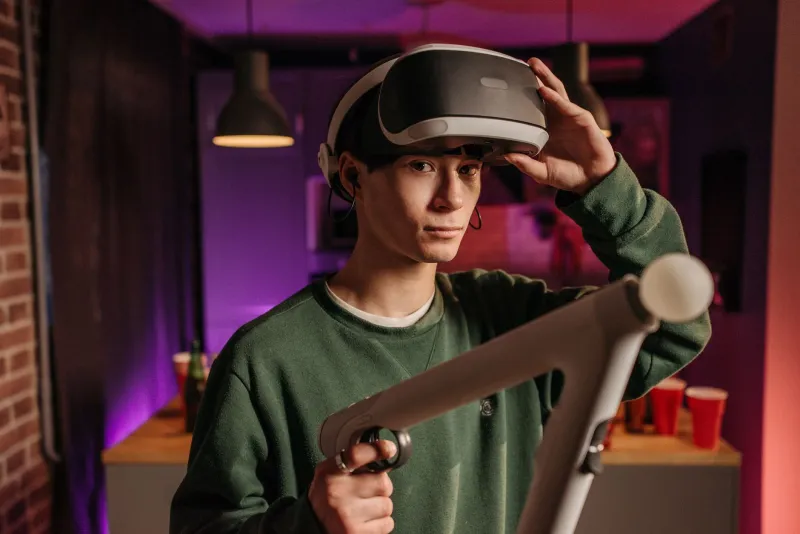
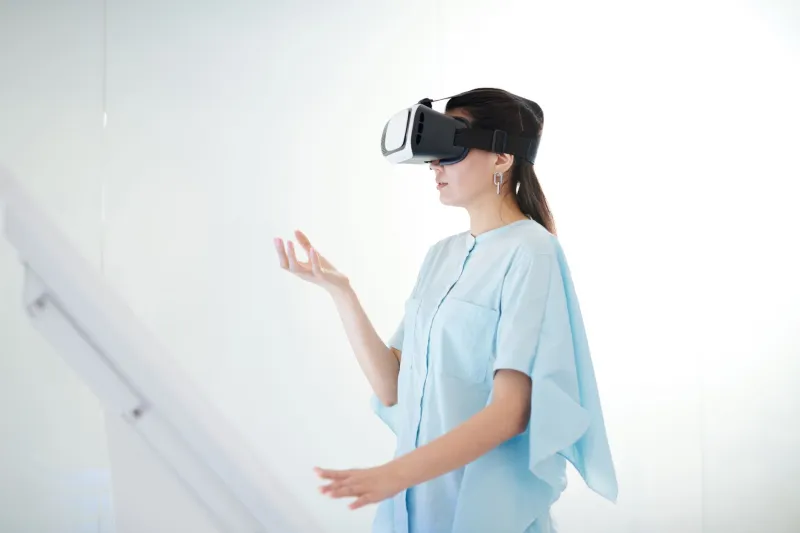
Part of what makes gaming streams compelling is the emotional feedback loop between viewer and streamer. You see their face, you read their reactions, you feel like you're in the room with them. A VR headset covers most of that. The streamer becomes this faceless person flailing around their living room, and the emotional connection — the thing that keeps people watching for hours — gets severed.
Face cameras help, but they create their own problems. You're now managing a face-cam feed, a headset feed, and a spectator camera simultaneously. For solo streamers without production support, that's a genuine technical mountain to climb.
"I tried doing a face-cam overlay for about two months," says Priya Nambiar, who streams VR horror games from her setup in Portland. "It helped, but then I had to position it so it wasn't covering the game, and the lighting from the headset made me look like I was being interrogated. It took way more effort than it was worth for the numbers I was pulling."
The Platforms That Are Actually Trying
Not everyone is waiting around for Twitch and YouTube to figure it out. A handful of platforms and tools have emerged specifically to address VR's streaming problem, and some of them are genuinely interesting.
VRChat has leaned into spectator-friendly design more aggressively than almost any other platform, building in camera tools that let streamers set up cinematic third-person views. The results look more like a virtual film shoot than a traditional gameplay stream, and the audience numbers in VRChat-focused content have reflected that — some creators have built substantial followings almost entirely off VRChat content.
Mixed reality capture, which composites the player into the game world using a green screen, has become the gold standard for VR content that actually translates to screen. Watch any of the bigger VR creators on YouTube and you'll notice they've almost all invested in it. The problem is the barrier to entry — you need a calibrated physical space, a decent camera, lighting setup, and software that doesn't always play nice. It's a part-time job on top of the streaming itself.
Some smaller platforms built natively around VR social spaces are also starting to carve out dedicated communities. They're not Twitch-scale by any measure, but they attract viewers who already understand the medium and don't need the constant hand-holding that mainstream audiences require.
What Actually Works, According to the People Doing It
After talking to a range of VR content creators, a few consistent patterns emerged about what moves the needle versus what drains it.
Physical comedy, it turns out, is gold. VR's full-body tracking means streamers are doing things with their bodies that flat-screen gaming simply can't replicate — ducking behind cover, swinging swords, nearly falling over mid-raid. Clips of those moments spread fast, and they function as organic advertising for VR content in a way that straight gameplay footage never does.
Co-op and social VR content also consistently outperforms solo play. When two people are sharing a VR space and reacting to each other, the emotional feedback loop that a headset normally kills gets partially restored through the interaction itself. It's not a perfect fix, but it's something.
And then there's the simple reality that discoverability on major platforms actively works against niche categories. The algorithm rewards consistency and volume in already-popular categories. A VR streamer building from scratch is swimming against a current that the platform itself generates.
The Gap Is Real, But It's Not Permanent
VR gaming has a streaming problem, but it's not an unsolvable one. The technology is genuinely getting better — mixed reality tools are becoming more accessible, headsets are improving their spectator output, and a generation of creators is slowly figuring out the language of VR content.
The medium just needs platforms willing to meet it halfway, and audiences willing to give it a slightly longer runway than they'd give a new Fortnite skin. Neither of those things is guaranteed, but the people in the trenches are making it work anyway, one awkward headset flail at a time.