Under Two Hundred Bucks and Actually Worth It: How Cheap VR Headsets Are Winning Over Everyday Gamers
Not that long ago, jumping into VR gaming meant dropping serious cash — we're talking $400, $500, sometimes closer to a grand when you factored in the PC you needed to run everything. It was a hard sell for the average gamer who just wanted to see what all the fuss was about. Most people shrugged, said "maybe someday," and went back to their couch and their flat screen.
But something has shifted. A handful of manufacturers have started releasing standalone headsets that hover right around — or comfortably under — the $200 mark. And unlike the budget VR attempts of a few years ago that left people with blurry visuals and a headache, some of these newer options are actually delivering a real immersive experience. The question worth asking now isn't just "can you afford it?" It's whether affordable VR is finally good enough to matter.
What's Actually Changed at the Low End
The honest answer is: a lot. Display technology has gotten cheaper. Processors that once cost a fortune to miniaturize are now commodity hardware. And companies that spent years burning money on R&D are finally seeing some of those investments pay off in the form of leaner, more efficient devices.
The result is a category of headsets that can deliver 90Hz refresh rates, inside-out tracking that doesn't require external sensors, and libraries of games that go well beyond tech demos and roller coaster simulations. We're talking about actual titles — rhythm games, shooters, puzzle adventures — that hold up as real gaming experiences.
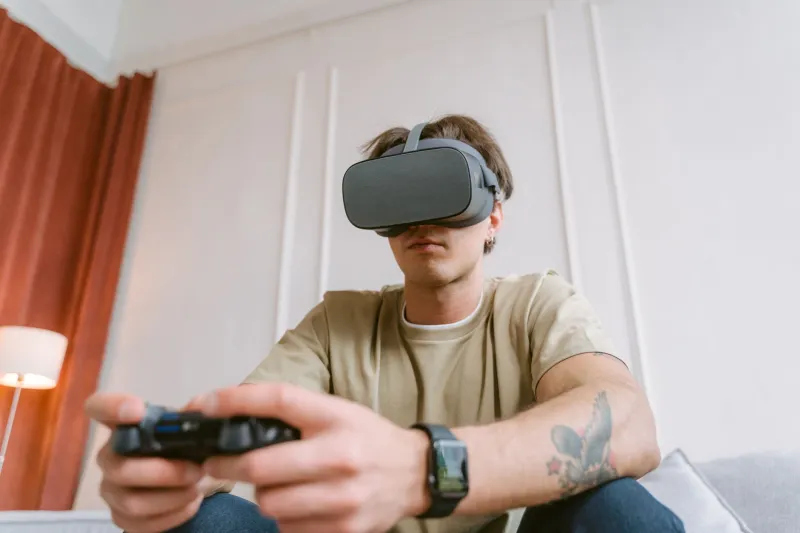
Stanalone designs have been the biggest game-changer here. Without the need for a gaming PC tethering the experience, the barrier to entry drops dramatically. You buy the headset, you turn it on, you play. That simplicity is hard to overstate for someone who's never owned a VR setup before.
Which Budget Headsets Are Actually Delivering
Not every cheap headset deserves your money, and that's worth being upfront about. There's still plenty of hardware out there that cuts corners in ways that kill immersion — narrow fields of view, laggy tracking, or controllers that feel like they were designed as an afterthought.
But a few standouts have earned genuinely positive buzz in the gaming community. The key differentiators tend to be tracking accuracy and display clarity. A headset can have a great processor, but if the tracking stutters when you reach for something or the lenses blur out around the edges, the immersion falls apart fast.
Library size also matters more than people expect. A cheap headset with only a few dozen games available is going to feel limiting within a month. The strongest budget options right now are the ones that have either built their own ecosystems or found ways to tap into existing storefronts with substantial catalogs. Variety keeps people engaged, and engaged users are the ones who actually stick with VR instead of leaving the headset to collect dust on a shelf.
The Gaming Library Problem (And How Some Brands Are Solving It)
Here's a tension that's defined budget VR for a while: developers don't want to spend resources building for a platform that doesn't have many users, but users don't want to buy a platform that doesn't have many games. It's a chicken-and-egg situation that has strangled more than a few promising VR devices.
What's different now is that some of the more successful budget headsets have reached enough of a user base to break that cycle. When a platform hits a critical mass of owners, developers start paying attention. And when developers start paying attention, the library grows. That growth attracts more buyers, and the flywheel starts spinning.
It's not a guaranteed outcome — plenty of platforms have stalled out before hitting that threshold — but the momentum feels more real right now than it has at any previous point in consumer VR history. Indie developers in particular have been quick to jump in, and honestly, some of the best VR gaming experiences right now are coming from small studios who saw an opportunity and moved fast.
Is This Sustainable, or Just a Race to the Bottom?
That's the question that keeps industry watchers up at night. Cutting prices is easy; maintaining quality while doing it is the hard part. Some analysts worry that the push toward ultra-affordable VR will result in a flood of mediocre hardware that gives casual buyers a bad first impression and turns them off the medium entirely.
It's a legitimate concern. VR's reputation has already taken hits from overhyped launches and underdelivering hardware. If a wave of $150 headsets hits shelves and most of them are genuinely bad, that could set back mainstream adoption more than the high price tags ever did.
But there's a counter-argument that's equally compelling. Competition at the low end forces everyone to get better. When multiple manufacturers are fighting for the same budget-conscious buyer, the ones who survive are the ones who figure out how to deliver real value. That pressure can be a powerful driver of innovation — not just cost-cutting.
The brands that are going to win this segment long-term aren't the ones who simply made something cheaper. They're the ones who made something cheaper and figured out where to put the quality that actually matters to gamers: tracking, display, and content.
What This Means If You're on the Fence
If you've been curious about VR but never felt like the price was right, the current market is genuinely the best entry point that's ever existed. That doesn't mean you should grab the first $179 headset you see on a shelf at a big-box retailer. Do a little homework. Read the reviews — including ours here at IgnisVR — and pay attention to what people say after they've had the device for a few weeks, not just during the honeymoon phase.
Look at the game library before you commit. Check whether the headset supports any kind of PC streaming if you want the option to expand your experience later. And think about what kind of games you actually want to play, because not every budget headset handles every genre equally well.
The $200 barrier isn't completely gone — there are still real tradeoffs at this price point — but for the first time, those tradeoffs feel like reasonable compromises rather than dealbreakers. That's a meaningful shift, and it's one that could bring a whole new wave of players into a medium that's been waiting for its mainstream moment for a long time.
VR gaming has always had the potential to be something genuinely transformative. The technology just needed to get out of its own way. At under two hundred bucks, it's finally starting to.