Headset Hell: Why VR Hardware Still Hasn't Figured Out the Human Head
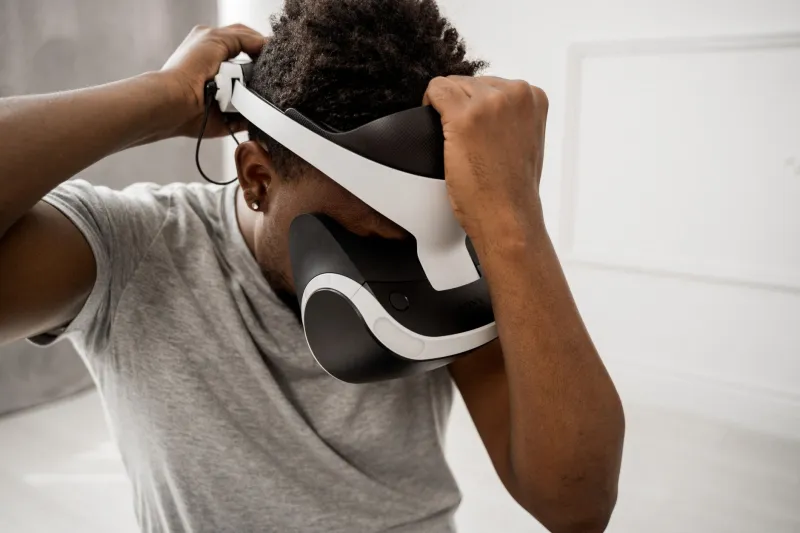
Picture this: you've finally carved out two uninterrupted hours for a VR session. The game is incredible, the immersion is real, and then — around the forty-five minute mark — a dull ache starts creeping across the bridge of your nose. Your neck starts protesting. The foam gasket around your eyes is doing something that can only be described as "aggressively sweating." You yank the headset off, and just like that, the magic is gone.
This isn't a rare experience. It's practically a rite of passage in the VR community, and honestly, it shouldn't be. We're living in an era where headsets can render photorealistic environments and track your hands with millimeter precision — yet a significant chunk of players can't comfortably wear these things for more than an hour. That's a problem worth talking about.
The Weight Problem Nobody Wants to Admit
Let's start with the obvious one: these headsets are heavy. The average consumer VR headset tips the scales somewhere between 500 and 800 grams. That might not sound like much sitting in your hand, but strap that weight to the front of your face and ask your neck to hold it at a slight forward tilt for ninety minutes — suddenly it feels like a whole lot more.
The physics here are working against us. Most headsets concentrate their mass up front, near the display panels and optics, which shifts the center of gravity away from your head. Your neck muscles compensate constantly, and over time, that compensation adds up to real discomfort. Some manufacturers have started addressing this by moving batteries to the back strap — Meta's Elite Strap approach is a good example — but it's still not a universal standard, and budget-tier headsets largely ignore the issue entirely.
What makes this especially frustrating is that the solution isn't some unsolved engineering mystery. Counterbalancing weight distribution is a well-understood concept. The barrier is mostly cost and manufacturing complexity, which means comfort ends up on the cutting room floor when margins get tight.
One Size Fits... Some
Here's another uncomfortable reality: the human head comes in a staggering variety of shapes and sizes, and most headsets are designed around a fairly narrow range of that spectrum. Interpupillary distance — the gap between your pupils — varies widely from person to person, and while many headsets offer IPD adjustment, the range of that adjustment is often limited. If your eyes happen to fall outside the sweet spot, you're looking at blurry edges, eye strain, and headaches that have nothing to do with the content you're watching.
Facial structure matters too. Players with wider faces, higher cheekbones, or glasses often find that standard face gaskets either press uncomfortably against their skin or create light leakage that kills immersion. The glasses situation in particular has been a long-running sore spot — many headsets technically accommodate eyewear, but "technically" is doing a lot of heavy lifting in that sentence.
The aftermarket has stepped up to fill some of these gaps. Third-party foam replacements, silicone gaskets, and custom 3D-printed face plates have become a cottage industry among dedicated VR players. The fact that this market exists at all is kind of a quiet indictment of how manufacturers have handled inclusivity in hardware design.
What Developers Think — and Why They're Partly On the Hook Too
It's tempting to put all the blame on headset manufacturers, but game developers carry some responsibility here as well. The way a VR experience is designed can dramatically affect how long someone can comfortably wear a headset.
Developers who build in natural pause points — moments where players can look around rather than constantly track fast-moving objects — tend to produce experiences that feel less taxing over time. Comfort settings like snap-turning options, vignetting during movement, and adjustable play speeds all reduce the physical toll of extended sessions. But not every studio prioritizes these features, especially smaller teams working with limited resources.
The tension between innovation and wearability is real. Pushing visual fidelity, adding more sensors, expanding field of view — all of these things tend to add weight or complexity to the headset form factor. Every leap forward in capability has to be weighed against what it costs the player in terms of physical comfort, and right now, that calculus doesn't always land in the right place.
Quick Fixes You Can Try Today
While the industry figures itself out, there are some practical moves you can make right now to get more comfortable time in your headset.
Redistribute the weight. If your headset has an adjustable rear strap or counterweight option, use it. Even a small shift toward balance makes a noticeable difference over a long session. Aftermarket elite-style straps are available for most major headsets and are generally worth the investment.
Swap the foam. The stock foam gaskets that ship with most headsets are mediocre at best. Silicone covers are more hygienic and often more comfortable, especially if you run warm. Several companies make drop-in replacements for popular headsets that cost between fifteen and forty dollars.
Take your IPD seriously. If your headset has manual IPD adjustment, don't skip the setup step. It's worth spending five minutes dialing it in properly — blurry optics are a major source of eye strain that players often attribute to other causes.
Build in breaks. This one sounds obvious, but it's easy to lose track of time in VR. Set a timer for forty-five minutes and actually take it off when it goes off. Let your eyes readjust and your neck decompress. You'll last longer overall.
Consider a counterweight mod. For standalone headsets especially, attaching a small counterweight to the rear strap — even something as simple as a portable battery pack — can dramatically reduce forward pull. It's a low-tech fix that works surprisingly well.
What the Next Generation of VR Hardware Needs to Get Right
The VR industry is at an interesting crossroads. Headsets have gotten genuinely good at the things that make virtual reality exciting — visual quality, tracking accuracy, controller responsiveness. But the hardware-to-human interface, the part where the device actually meets your face, still feels like an afterthought in too many cases.
What the next generation of headsets needs isn't necessarily lighter materials or more adjustment points, though both would help. What it really needs is a shift in design philosophy — one that treats comfort as a primary feature rather than a spec sheet footnote. That means broader IPD ranges, modular face gaskets designed for different facial geometries, and genuine investment in weight distribution from the ground up.
Some of this is already happening. Pancake lens technology is allowing for thinner, lighter optical stacks. Eye tracking is enabling dynamic foveated rendering that reduces processing load without sacrificing visual quality. The pieces are there. The question is whether manufacturers will prioritize assembling them into something that actually fits the full spectrum of human heads — not just the average one.
VR's biggest promise is total immersion. But immersion breaks the moment you're too uncomfortable to stay in it. Until headset makers treat ergonomics with the same seriousness they bring to display resolution and refresh rates, there's a ceiling on how transformative this technology can actually be. And that ceiling is sitting right on top of your aching forehead.