Your Brain Is Lying to You: The Real Science of VR Motion Sickness and How to Outsmart It
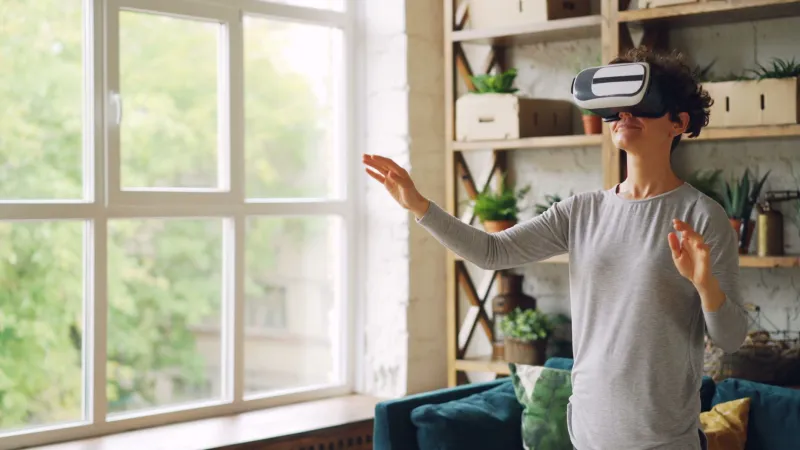
You strap on a headset, load up a game you've been excited about for weeks, and about fifteen minutes in — there it is. That slow, creeping wave of nausea that tells you the session is over before it ever really started. VR motion sickness is one of the biggest barriers between casual players and the full potential of virtual reality, and it's frustratingly common. But here's the thing: it's not a random glitch in your body. It's actually a very logical response to a very confusing situation — and once you understand what's happening, you can start doing something about it.
The Mismatch Your Brain Can't Ignore
At the core of VR motion sickness is something researchers call sensory conflict theory. Your vestibular system — the balance and motion-detection hardware living in your inner ear — is constantly sending signals to your brain about how your body is moving. At the same time, your visual cortex is processing everything your eyes are seeing. Under normal circumstances, these two systems tell the same story. You move, you see movement, you feel movement. Done.
In VR, that agreement breaks down. Your eyes are watching you sprint through a dungeon or bank hard in a spaceship cockpit, but your inner ear is reporting that you're sitting completely still on your couch. Your brain gets two contradictory reports, and it doesn't know what to make of them. Historically — and we're talking evolutionary history here — that kind of sensory mismatch was associated with one thing: poisoning. So your brain does what it evolved to do. It tries to purge whatever caused the confusion. Hence, nausea.
Dr. Thomas Stoffregen, a kinesiologist at the University of Minnesota who has studied motion sickness extensively, has pointed out that postural instability — the subtle ways your body wobbles trying to stay upright — may also play a key role. In VR, your postural control system gets thrown off by the visual input, adding another layer of physiological chaos to an already confused nervous system.
The Variables That Make It Worse
Not all VR experiences are created equal when it comes to comfort. A few specific factors consistently push players toward the danger zone:
Frame rate and latency are huge. When the image your headset displays lags even slightly behind your head movement — a delay called motion-to-photon latency — the mismatch between what you see and what you feel spikes sharply. Most modern headsets target a latency under 20 milliseconds for a reason. Anything higher and your brain starts getting suspicious.
Locomotion type matters enormously. Smooth, analog stick-based movement is the biggest offender for most players because your eyes perceive continuous motion while your body stays put. Teleportation locomotion sidesteps this entirely by cutting rather than gliding, which is why so many VR titles offer it as an accessibility option.
Field of view and vignetting also play a role. A wider FOV gives your peripheral vision more visual motion information, which can intensify the conflict. Many games now include a comfort vignette option — a subtle darkening of the edges of your vision during movement — which reduces how much motion data your periphery processes.
Building Your VR Legs: It's a Real Thing
Here's the encouraging part: most people can adapt. The process is often called getting your "VR legs," and it's grounded in real neurological plasticity. Your brain is capable of learning to reconcile the sensory conflict — it just needs time and gradual exposure to do it.
The key word there is gradual. Jumping straight into a fast-paced shooter for two hours on your first session is basically asking for a bad time. Instead, treat it like any other physical conditioning:
- Start with stationary or room-scale experiences. Games where you physically move your body rather than using a joystick to locomote are dramatically more comfortable. Beat Saber, Superhot VR, and Pistol Whip are excellent starting points because your real-world motion matches what you see.
- Keep early sessions short. Fifteen to twenty minutes is a reasonable ceiling for the first week. Stop before you feel sick, not after. Pushing through nausea doesn't build tolerance — it just makes the experience miserable and trains your brain to dread the headset.
- Increase duration incrementally. Add five to ten minutes per session over the course of a couple of weeks. Most players report significant improvement within two to three weeks of consistent, short sessions.
Remedies That Actually Have Science Behind Them
Beyond gradual exposure, there are a handful of interventions with legitimate support behind them:
Ginger — yes, the real kind — has been shown in multiple studies to reduce nausea through its effect on serotonin receptors in the gut. Ginger chews or ginger tea about thirty minutes before a session is a low-effort, low-risk option worth trying.
Acupressure wristbands (the kind sold for sea sickness, like Sea-Bands) apply pressure to the P6 point on the inner wrist. The evidence here is mixed, but several small studies have found them modestly effective, and they're cheap enough that experimenting costs you almost nothing.
Fresh air and cooling can interrupt a building nausea response. A fan blowing on your face during play reduces thermal discomfort and provides real-world sensory grounding — some players swear this alone makes the difference between a twenty-minute and a two-hour session.
Over-the-counter antihistamines like meclizine (Bonine) work on the same pathways targeted by prescription motion sickness medications and are available without a prescription. They do cause drowsiness in some people, so test them cautiously.
Beginner-Friendly Games Worth Starting With
If you're in the early stages of building tolerance, your game selection matters as much as your technique. Here are a few titles that consistently get praised for being easy on newcomers:
- Moss — A third-person puzzle adventure where you observe the world from outside rather than inhabiting it, keeping the immersion high and the motion sickness risk low.
- Tetris Effect: Connected — Meditative, mostly stationary, and genuinely beautiful. An ideal first VR experience.
- The Room VR: A Dark Matter — A slow-paced puzzle game with minimal locomotion that lets you ease into the medium without any pressure.
- Walkabout Mini Golf — Exactly what it sounds like, and a surprisingly great comfort title for players of all ages.
The Long Game
VR motion sickness is real, it's physiologically grounded, and it's not something you should feel embarrassed about — even experienced gamers deal with it when they try a new type of movement or a poorly optimized title. But it's also not a permanent wall for most people. With a little patience, the right starting library, and some practical countermeasures, the vast majority of players can work their way into longer, more comfortable sessions.
Your brain is incredibly adaptable. Give it the right conditions, and it'll eventually figure out that the headset isn't trying to poison you. From there, the whole virtual world opens up.