Something Feels Off: The Invisible Psychological Tripwire Hidden Inside Your Favorite VR Games
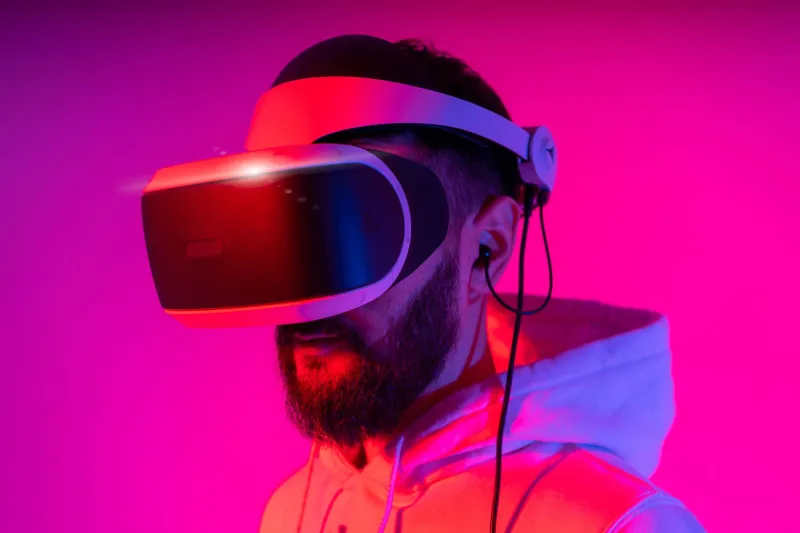
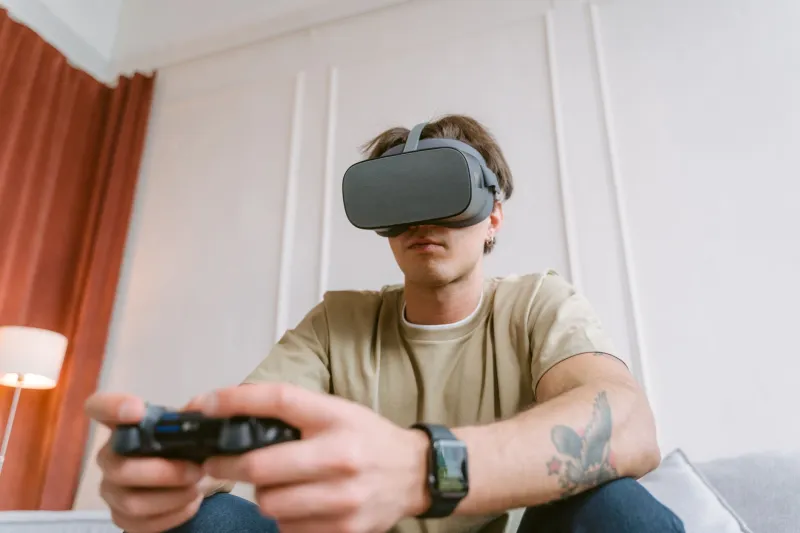
You drop into a VR game that looks absolutely incredible. The lighting is stunning, the environments are detailed, the characters move fluidly. And then — somewhere around the twenty-minute mark — you take off the headset without really knowing why. You weren't bored. You weren't motion sick. Something just felt wrong.
This is one of VR's least-talked-about problems, and it's way more common than developers like to admit.
The Presence Paradox
In VR design circles, "presence" is the holy grail — that magical sensation where your brain stops knowing it's in a simulation and just accepts the virtual world as real. Researchers at institutions like the University of Southern California have studied presence for decades, and the consensus is clear: achieving it is extraordinarily difficult. But here's the twist nobody warns you about. The closer a game gets to presence, the more catastrophically disorienting its failures become.
Think of it this way. If a cartoon character blinks at the wrong time, you shrug it off. If a hyper-realistic virtual human blinks at the wrong time — or doesn't blink at all — your nervous system quietly files a complaint. You can't articulate it. You just feel uneasy.
This is VR's version of the uncanny valley, and unlike the original concept (which applies mostly to humanoid robots and CGI faces), the VR variant is sneakier. It doesn't just live in character faces. It hides in physics, in audio timing, in the way shadows fall, in how objects respond when you pick them up.
Where Game Design Goes Quietly Wrong
Several specific design choices tend to be repeat offenders when it comes to triggering this unsettled feeling.
Mismatched audio-visual timing is one of the biggest culprits. Human brains are extraordinarily sensitive to synchronization between what we see and what we hear — we're talking milliseconds of tolerance. When a virtual door slams and the sound arrives even slightly late, something in your subconscious flags the world as fake in a way that feels almost threatening rather than just technically imperfect.
Inconsistent physics responses are another trap. Players in VR don't just observe environments — they interact with them. When you reach out to grab a virtual object and it slides unnaturally, or when a surface doesn't respond to your virtual hand the way your muscle memory expects, the illusion fractures. Not in a "oh, video game" way, but in a deeper, more visceral way that breeds low-grade anxiety.
Character locomotion gaps deserve special mention. A character can have a photorealistic face and still move in ways that feel deeply wrong — specifically when their upper body and lower body seem disconnected, or when their feet don't properly interact with terrain. Players notice this even when they can't name it.
Developers Are Thinking About This — Sort Of
We talked to a few indie VR developers about how they approach this problem, and the answers were fascinating.
One developer working on a social VR title described spending three full weeks on nothing but hand interaction feedback. "The visual part took maybe two days," they said. "But getting the haptic feedback and the physics response to feel right — to feel like it matched what your hand expects — that took forever. And if we got it wrong, playtesters would quit the demo and not be able to explain why."
Another developer, building a narrative VR horror game, actually leaned into the discomfort deliberately — but noted that doing so requires incredible precision. "There's a version of 'unsettling' that makes the player feel like the game is broken," they explained. "And there's a version that makes the player feel like the world is broken, which is what you want in horror. Threading that needle is genuinely one of the hardest things I've ever done in game design."
The problem, both agreed, is that VR development pipelines don't always have time or budget to chase these micro-level details. And when they're skipped, players quit games that are otherwise excellent — without leaving reviews that explain why.
Why Your Brain Is the Real Villain Here
Here's the uncomfortable truth: the human brain is not actually designed to be fooled by VR. It's designed to detect inconsistencies in the physical world as a survival mechanism. When VR gets close enough to reality to activate that detection system but not close enough to pass it, the result isn't neutrality. The result is a quiet, background alarm that something in your environment is wrong.
This is partly why the most immersive VR experiences often succeed by committing to a stylized aesthetic rather than photorealism. Games like Moss or Superhot VR don't try to look like the real world — and because of that, they never trigger the part of your brain that checks for reality consistency. They set their own rules and follow them perfectly, which paradoxically feels more believable than a game that aims for realism and misses by five percent.
The Fix Isn't Just Better Graphics
A lot of people assume that as hardware improves and VR graphics get sharper, these problems will disappear. That's almost certainly wrong. Better fidelity raises the stakes — it doesn't lower them. A more realistic-looking character with the same locomotion gaps will feel more wrong, not less.
The real solution is a design philosophy that treats coherence as more important than visual quality. Every element of a VR world — audio, physics, animation, haptics, lighting — needs to follow a consistent internal logic. Players don't need perfection. They need consistency.
Some studios are starting to get this. But it requires a level of cross-disciplinary thinking — combining psychology, audio engineering, animation, and interaction design — that traditional game development pipelines aren't always built to support.
Until that changes, a lot of great VR games are going to keep losing players who can't explain why they stopped playing. And that's a problem worth taking seriously.