From Headset to Hole in Your Wallet: The True Cost of Going Deep Into VR
Let's be real for a second. The moment you strap on a headset and get your first taste of actual virtual reality, something clicks. You want more. Better. Deeper. And that's exactly when VR starts quietly draining your bank account in ways nobody warned you about.
The headset is the easy part. It's the thing on the box, the number you compare between brands, the figure you budget for when you decide to take the plunge. But serious VR gaming — the kind where you're fully immersed, moving naturally, feeling every virtual punch and explosion — that's a whole different financial conversation. So let's actually have it.
The Entry Tier: What You Think You're Spending
If you're starting with a standalone headset like the Meta Quest 3, you're looking at around $500 for the base unit. That's not nothing, but compared to a high-end gaming PC build, it feels almost reasonable. Throw in a few game purchases — say $30 to $60 each — and your first month might run you $600 to $700 total. Manageable.
This is the tier most people think they're buying into permanently. And for casual players, maybe they are. But if you're the kind of gamer who reads hardware specs for fun and has opinions about refresh rates, you're probably not staying here long.
The Mid-Tier Reality Check
Once standalone starts feeling limiting, the natural next step is PC-powered VR. That means either a dedicated gaming rig or a serious upgrade to what you already have. A GPU capable of running demanding VR titles well — think an NVIDIA RTX 4070 or better — will run you $500 to $700 on its own. Add a headset like the Valve Index or a PC-connected Meta Quest Pro, and you're suddenly looking at $1,500 to $2,500 just to get the setup running properly.
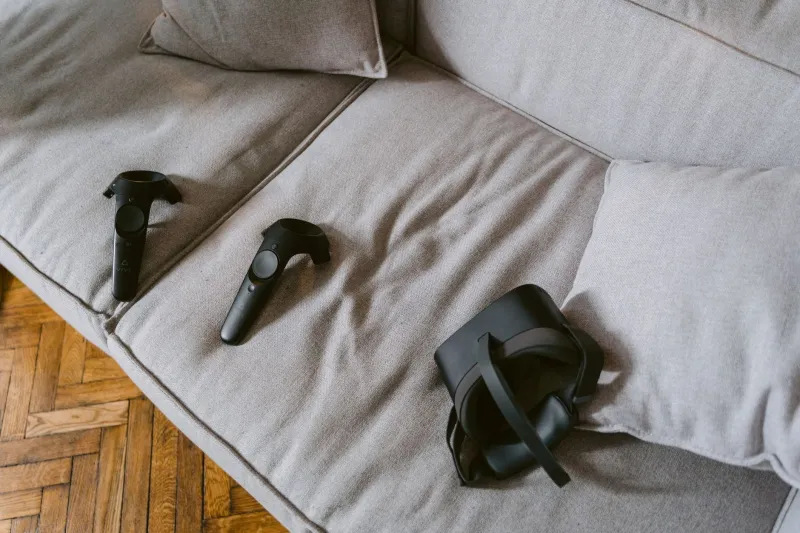
Then come the accessories that quietly become non-negotiable. Better controllers with finger-tracking or haptic feedback. A charging dock that doesn't leave your controllers dead at the worst moment. A facial interface that doesn't make your face sweat like you're running a 5K. Each of these things costs somewhere between $30 and $150, and you'll end up buying more of them than you planned.
By the time most mid-tier enthusiasts settle in, they've spent somewhere in the $2,000 to $3,500 range. Still justifiable if you're comparing it to, say, a high-end home theater setup. But we're not done.
The Space Problem Nobody Talks About Enough
Here's the hidden cost that catches people completely off guard: room-scale VR needs actual room. Not metaphorical room — literal square footage. Ideally, you want a minimum 6.5 by 6.5 foot cleared play space, and more is always better for full-body movement games.
For a lot of Americans living in apartments or shared homes, that space doesn't just exist. Creating it means rearranging furniture, buying storage solutions, or in some cases renting a slightly larger place than you otherwise would. That last one sounds extreme, but VR enthusiast forums are full of people who've quietly factored their hobby into housing decisions.
If you want to go further — foam floor padding to protect your knees and reduce injury risk, wall padding if you're prone to misjudging your boundaries, cable management systems for tethered setups — you're adding another $100 to $400 to the pile.
When the Gear Gets Serious: Full-Body Tracking and Beyond
This is where things get genuinely expensive. Full-body tracking systems, like those using Vive Trackers or third-party motion capture rigs, can run anywhere from $300 to well over $1,000 depending on how many points you're tracking and which platform you're building around. These aren't mainstream purchases, but they're increasingly popular in the VR fitness and social gaming communities — and once you've seen what they can do, it's hard to go back.
Haptic vests and gloves are another category that's growing fast. Devices like the bHaptics TactSuit or various force-feedback glove prototypes can cost $500 to $1,500 or more. They're not essential, but they're the kind of thing that, once you've tried them, completely changes your definition of "immersive."
At this tier, you're easily looking at a $5,000 to $8,000 total investment if you're building from scratch with top-shelf gear across the board.
So When Does It Stop Making Sense?
That depends entirely on what you're comparing it to and what you get out of it.
A hardcore traditional PC gaming setup — high-end rig, ultrawide monitor, mechanical keyboard, premium headset, gaming chair — can easily run $3,000 to $5,000 without blinking. Console gaming with a top-tier TV, surround sound, and a growing game library isn't cheap either. VR isn't uniquely expensive in the gaming world; it just front-loads costs in ways that feel more dramatic.
The real question is whether the experience justifies the investment for you. If you're playing Beat Saber three times a week, using VR for fitness, and exploring social platforms like VRChat with friends, the cost-per-hour math can actually work out in VR's favor. If you bought a headset, played for two months, and it's now gathering dust next to your Wii, that's a different story entirely.
A Practical Budget Framework
Here's a rough way to think about it before you start spending:
Curious Starter ($400–$700): Standalone headset, a handful of games, no PC required. Great for testing the waters without major commitment.
Committed Enthusiast ($1,500–$3,500): PC-powered setup with quality headset, upgraded GPU, essential accessories, and a proper play space. This is where most serious players land.
Full Immersion Build ($5,000–$10,000+): High-end PC, premium headset, full-body tracking, haptic hardware, optimized play space. Reserved for people who've decided VR is their primary gaming platform and want to squeeze every drop of immersion out of it.
None of these tiers are objectively right or wrong. But knowing which one you're actually buying into — not just the entry price, but the inevitable upgrade path — is the difference between a great investment and an expensive regret.
The Bottom Line
VR gaming can absolutely justify its cost. For the right kind of player, there's genuinely nothing else like it. But walking in with eyes open means understanding that the headset price tag is a starting line, not a finish line. Budget for the full picture, be honest about how much you'll actually use it, and don't let the excitement of a first purchase push you into a tier you're not ready for.
Ignite your reality — just maybe keep a close eye on your credit card statement while you do it.