Surrounded by Thousands, Alone in the Headset: VR's Unexpected Loneliness Problem
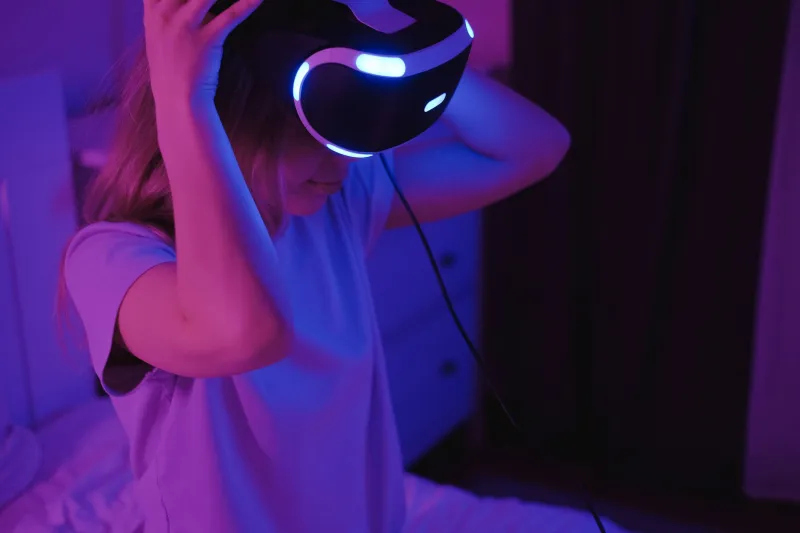
Imagine strapping on a headset, stepping into a virtual world shared by thousands of other real people, and somehow walking away feeling more isolated than before you logged in. Sounds counterintuitive, right? But ask around in VR communities — Reddit threads, Discord servers, even in-game chat rooms — and you'll hear the same story repeated over and over. Players are technically surrounded, yet emotionally adrift.
This isn't a niche complaint from a handful of introverts. It's a pattern that researchers, developers, and regular gamers are all starting to take seriously. VR was supposed to be the technology that finally made online connection feel real. So why, for so many people, does it feel like anything but?
The Illusion of Presence Isn't the Same as Belonging
Here's where things get interesting from a psychological standpoint. VR is genuinely impressive at creating what researchers call "presence" — that uncanny feeling that you're actually somewhere, that the virtual space around you has weight and dimension. Your brain buys into it in ways it simply doesn't when you're staring at a flat monitor.
But presence and belonging are two completely different things. You can feel like you're physically standing in a room full of people and still feel invisible. Anyone who's ever walked into a party where they don't know a soul understands that instinctively. VR replicates the sensation of being in a shared space, but it doesn't automatically generate the emotional scaffolding that makes shared spaces feel meaningful.
The human brain is wired to pick up on micro-signals — a glance held a half-second too long, a shift in body language, the warmth in someone's voice — that tell us whether we matter to the people around us. In most VR environments, those signals are either missing entirely or so poorly simulated that our brains clock the absence immediately. You're present, technically. But you don't register to anyone around you in a way that feels real.
Design Choices That Accidentally Push People Apart
A lot of VR's loneliness problem is baked right into how these spaces are built. Many popular social VR platforms and multiplayer games are designed around activity hubs — massive open lobbies, sprawling game worlds, giant communal arenas. The logic makes sense on paper: more people, more potential connections.
In practice, scale works against intimacy. When you drop a player into a virtual world with five hundred other people and give them no particular reason to interact with any specific one of them, the default behavior isn't socializing — it's drifting. People wander, observe, maybe exchange a few words, and log off feeling like they never quite landed anywhere.
Compare that to games with tighter, purpose-built social structures. Titles that put small groups of players in cooperative scenarios — working through a puzzle together, defending a shared objective, building something collaboratively — tend to generate much stronger feelings of connection, even between strangers. The task gives people a reason to actually see each other.
The difference isn't the technology. It's the design philosophy.
The Avatar Problem Nobody Talks About Enough
There's another layer here that doesn't get nearly enough attention: avatars. Specifically, the gap between how you present yourself in VR and how that presentation lands with other people.
In most VR platforms, your avatar is either a cartoonish approximation of a human being or a highly stylized character that strips away most of the expressive range your real face has. Full-body tracking is still a premium feature that the average player doesn't have access to. Half-body avatars — floating torsos with hands — are still the norm in a lot of spaces.
What this means in practice is that even when two players are genuinely trying to connect, they're doing it through a layer of abstraction that mutes emotional expression significantly. You can hear someone laugh, but you can't see their face crinkle. You can tell someone's excited by their voice, but their avatar is standing perfectly still. The emotional bandwidth of the interaction is narrowed in ways that make deep connection harder to achieve, even when both parties want it.
What Developers Are Actually Experimenting With
The good news is that this isn't being ignored. A growing number of developers are actively rethinking how social VR spaces work, with some genuinely promising results.
Smaller-scale gathering spaces are one trend picking up steam. Instead of building massive public lobbies, some platforms are experimenting with intimate environments — virtual coffee shops, small game rooms, cozy hangout spots — that naturally encourage tighter group interaction. When the space itself signals "this is a place to connect," player behavior tends to follow.
Progressive avatar expressiveness is another area seeing real investment. Some studios are experimenting with AI-driven facial tracking through standard headset cameras, attempting to map real expressions onto avatars in real time without requiring expensive external hardware. Early results are imperfect, but the direction is clearly right.
There's also growing interest in what some designers call "social scaffolding" — built-in prompts, shared activities, and conversation starters baked into the environment itself. Think of it like the difference between an empty room and a room with a foosball table: the object gives strangers an excuse to interact without the awkward overhead of initiating conversation from scratch.
VRChat, for all its chaotic reputation, has actually been a fascinating case study here. Its most tightly-knit communities tend to form around specific recurring events, shared creative projects, or dedicated world-building groups — not random encounters in public lobbies. The platform works socially when it gives people a reason to keep coming back to each other.
Loneliness Isn't a Bug — It's a Warning
Here's maybe the most important reframe: the loneliness that players feel in VR isn't a sign that the technology has failed. It's a signal that the technology has succeeded well enough to raise expectations it isn't yet equipped to fully meet.
When VR presence is convincing enough that your brain expects real social rewards from it, the absence of those rewards stings in a way that flat-screen gaming never quite triggers. You don't feel lonely playing an online shooter on your TV the same way you might feel lonely standing in a virtual bar surrounded by floating avatars. The immersion raises the emotional stakes.
That's actually a meaningful insight for where VR needs to go. The hardware is getting better at making worlds feel real. The next frontier is making the people in those worlds feel real, too — not just present, but genuinely connected in ways that matter.
Until that gap closes, VR's social promise will keep outrunning its social delivery. And a lot of players will keep logging off feeling like they almost had something — but not quite.