Scared Straight: Why VR Horror Hits on a Completely Different Level — and the Games Brave Enough to Prove It
There's a moment in Resident Evil 7 in VR where you're hiding under a table while a seven-foot monster stomps past, close enough that you could theoretically reach out and touch it. Your brain — your actual, rational, adult brain — knows you're sitting in your living room. And yet every single alarm system in your nervous system is screaming.
That's not good game design. That's neuroscience.
VR horror is a genuinely different category of experience from traditional horror gaming, and the gap is wider than most people expect before they try it. If you've ever wondered why clips of people panicking in VR horror games look so dramatically over-the-top compared to someone calmly playing the same game on a monitor, here's the explanation — and a guide to the titles that are doing it best right now.
Why Your Brain Doesn't Know It's Fake
The human brain processes threat responses through systems that predate rational thought by millions of years. When something lunges at you, your amygdala — the part of your brain handling fear responses — reacts before your conscious mind even registers what happened. This is why you flinch at jump scares even when you know they're coming.
Traditional gaming can trigger this system, but it's working against a significant handicap: the frame. A television or monitor is surrounded by your actual environment. Your peripheral vision constantly reminds you that you're safe, sitting in a room, holding a controller. That contextual safety signal is powerful. It keeps the fear manageable.
VR eliminates the frame entirely.
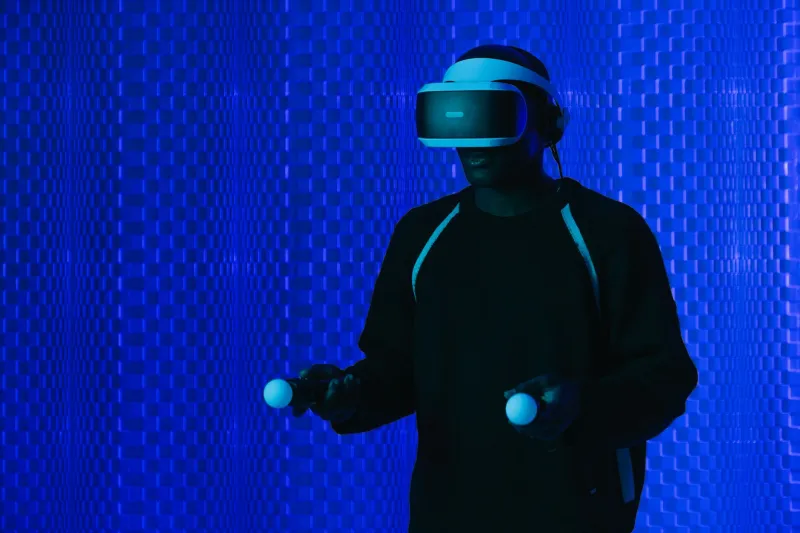
When a headset replaces your entire field of view, the brain's threat-detection systems lose their primary reality anchor. The contextual safety signal disappears. What's left is a nervous system responding to visual and audio information as though it's real — because, as far as the oldest parts of your brain are concerned, it might be.
Add spatial audio that tracks to your head movement, haptic feedback that syncs with on-screen events, and the physical act of doing things with your hands rather than pressing buttons, and you've built a fear machine that operates on a level traditional gaming simply can't reach.
The Titles That Are Actually Doing This Right
Resident Evil 7: Biohazard (PSVR / PSVR2)
This is the benchmark. Capcom's decision to make the entire base game playable in VR on PlayStation remains one of the boldest moves in horror gaming history, and it paid off. The Baker family plantation has never been more suffocating than when you're physically turning your head to look down dark hallways and crouching behind furniture to hide. The PSVR2 version adds haptic feedback through the controllers and headset, which means you feel the world as much as you see it. Not for the faint of heart — and we mean that literally.
Lies Beneath (Meta Quest)
Often overlooked, Lies Beneath is a cel-shaded survival horror game built exclusively for VR that absolutely delivers. Set in a small Alaskan town overrun by monsters, it leans into psychological dread as much as jump scares. The art style is distinctive enough to make it feel like a nightmare graphic novel, and the VR-native design means every scare is engineered for the medium from the ground up. This one has earned its cult following.
The Walking Dead: Saints & Sinners (Meta Quest / PC VR)
Technically a survival game, but horror fans will find plenty here. The tension of scavenging through abandoned New Orleans buildings — knowing walkers can hear you move — creates a sustained anxiety that's exhausting in the best possible way. The physical combat system means you're actually swinging, stabbing, and pushing. Your arms will be tired. Your nerves will be shot. It's great.
Five Nights at Freddy's VR: Help Wanted (Meta Quest / PC VR)
If the original FNAF games made you anxious, this will make you deeply regret owning a VR headset — in the most fun way possible. The game takes the surveillance-and-survival mechanics of the series and turns them into something genuinely claustrophobic. Peering into a vent to check for animatronics when you can actually look around is a completely different experience from clicking a camera button.
Into the Radius (Meta Quest / PC VR)
A slower burn than the others on this list, Into the Radius drops you into a surreal, post-apocalyptic exclusion zone in Russia filled with anomalies, hostile entities, and an overwhelming sense of wrongness. It's less about jump scares and more about sustained dread — the feeling that something is watching you, always, even when the screen is quiet. Horror fans who prefer atmosphere over shock will find this one lingers.
Surviving the Experience: Practical Tips for VR Horror
If you're new to VR horror — or you've tried it and tapped out — a few adjustments can make these experiences more manageable without ruining the fun.
Play in short sessions. VR horror is cognitively exhausting in a way that flat-screen gaming isn't. Thirty to forty minutes is a reasonable session; anything beyond an hour and your fear responses start to fatigue, which paradoxically makes the experience less effective.
Use room-scale if you have the space. Being able to physically step back from a threat — even knowing it doesn't help — gives your nervous system a release valve. It makes the experience more sustainable.
Turn the lights off, but have an out. Full darkness maximizes immersion and maximizes terror. If you're playing solo, make sure you can pause and remove the headset quickly without tripping over anything. Know your exit.
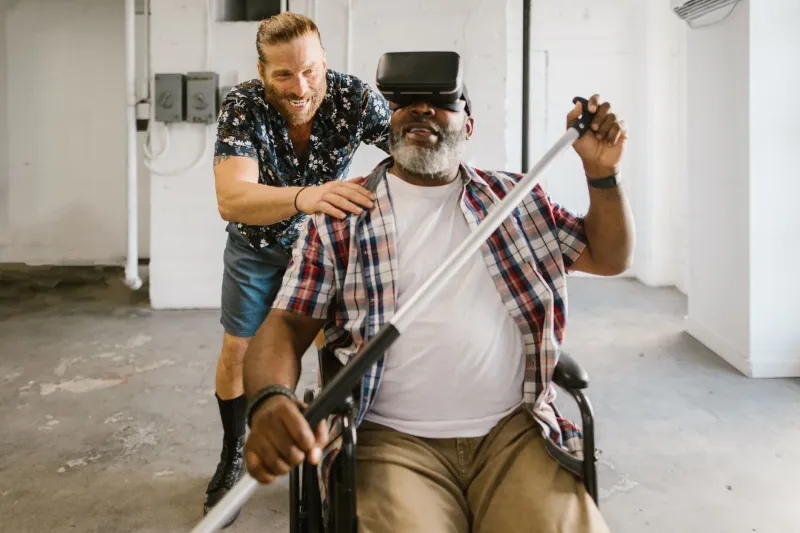
Don't play alone for your first time. Having someone in the room — even just to laugh at your reactions — provides that real-world anchor your brain is looking for. It makes the whole thing more enjoyable and a lot less likely to end with you sleeping with the lights on.
The Responsibility Question
As VR horror gets more sophisticated, developers are having real conversations about where the line is. The medium is powerful enough that poorly designed experiences can cause genuine distress rather than the enjoyable kind of fear. The best studios in the space are thinking carefully about pacing, player agency, and the difference between tension and trauma.
The good news is that the titles getting the most attention right now are largely being made by teams who understand the assignment. They're not just porting flat-screen scares into headsets — they're rethinking fear from the ground up for a medium that deserves that respect.
The result is a genre that's unlike anything else in gaming. Intense, unforgettable, and — once you've experienced it — very hard to go back from.
Just maybe don't play Resident Evil 7 alone at midnight. Trust us on that one.