High-End Hell: The VR Experience Gap That's Locking Out Regular Players
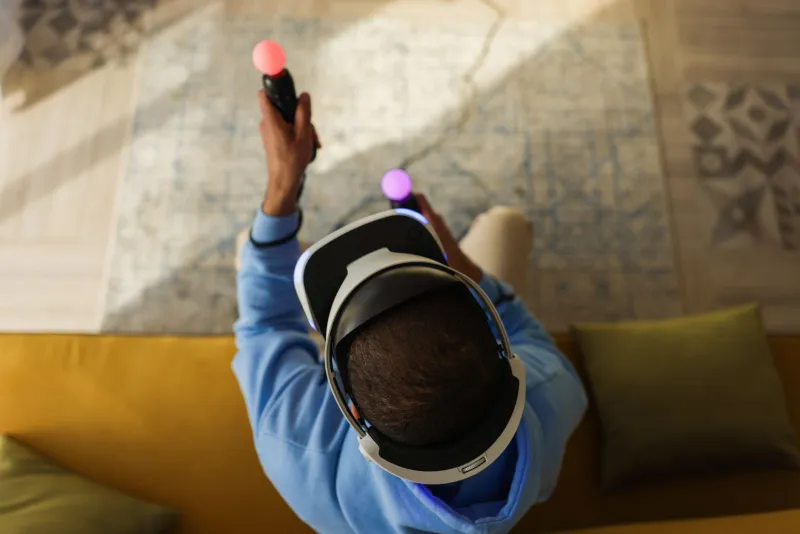
Picture this: a VR game drops with reviews calling it a genuine leap forward — stunning visuals, physics that feel real, interactions that finally live up to the promise of the medium. You pull up the system requirements. Recommended GPU: an RTX 4080. Recommended RAM: 32GB. Compatible headset: one that costs $999 by itself. You do the math and realize that running this game properly would require a rig that costs more than your car.
This isn't a hypothetical. It's a pattern that's playing out with increasing regularity in the VR space, and it's creating a widening fault line between the players who can access the best experiences and everyone else.
The Numbers Don't Lie
Let's actually run through what a true top-tier PC VR setup costs right now. A high-end gaming PC capable of hitting recommended specs for the most demanding VR titles — we're talking RTX 4080 or better, a current-gen Intel or AMD processor, 32GB of fast RAM — will run you somewhere between $2,500 and $4,000 depending on how you build it. Add a flagship headset like the Valve Index or a Meta Quest 3 used in PC VR mode with a quality link cable, and you're looking at another $500 to $1,000. Throw in the motion controllers, any additional tracking hardware, a proper play space, and a PC desk setup that can accommodate all of it, and $5,000 starts looking like a conservative estimate.
For context, the average American household spends about $3,200 per year on entertainment in total. The idea that a single gaming platform should cost that much to access at its best is, to put it mildly, a hard sell.
And yet the games keep coming out with specs that assume this kind of setup. Not every title — standalone VR on the Quest platform has made real inroads toward accessibility — but the ones generating the most critical buzz, the ones that show up in "future of VR" conversations, increasingly demand premium iron to run properly.
Who Are These Games Actually Built For?
The honest answer, according to several indie developers we spoke with, is complicated.
One developer who builds primarily for PC VR described the tension clearly: "When you're designing a game, you want to push what's possible. You want to build the experience that genuinely couldn't exist anywhere else. But the moment you start optimizing hard for lower-end hardware, you're making compromises that change what the game fundamentally is."
That tension is real. VR's visual and computational demands scale differently than flat-screen gaming. Rendering a scene at high resolution, high refresh rate, with proper depth and parallax, in real time, without introducing the latency that causes motion sickness — it's a genuinely difficult engineering problem. The headroom between "runs okay" and "runs correctly" is enormous, and the difference in experience quality is immediately noticeable in a way that it often isn't on a regular monitor.
But there's another factor that's less technical and more market-driven: aspirational specs. Some developers admit, usually off the record, that building for high-end hardware is partly about positioning. A game that only runs on a $4,000 rig reads as premium in ways that affect press coverage, community perception, and the kind of players it attracts. There's a status dimension to hardware gatekeeping that nobody talks about openly but that shapes decisions constantly.
The Indie Accessibility Dilemma
Smaller studios feel this pressure most acutely, and their experiences reveal just how thorny the tradeoffs are.
For indie developers without the budget to hire teams of optimization specialists, building for lower-spec hardware often means cutting features that are central to the VR experience. Reduce polygon counts too aggressively and the world stops feeling real. Lower the physics simulation fidelity and interactions become floaty and unconvincing. Scale back the render resolution and you introduce exactly the visual artifacts that trigger motion discomfort in sensitive players.
"We spent three months trying to get our game running well on mid-range hardware," one small studio founder told us. "What we ended up with was a version that technically ran, but the experience was so degraded that it didn't represent what the game was supposed to be. We had to make a call about which audience we were actually serving."
They went with the high-end target. Their game got strong reviews from the VR enthusiast press. It also sold a fraction of what it might have on a more accessible platform.
This is the core dilemma: optimizing for accessibility often means compromising the very qualities that make a VR experience worth having. And for small studios with limited resources, that optimization work can consume more time than building the game in the first place.
The Standalone Counterargument
It would be incomplete to talk about VR's hardware cost problem without acknowledging what Meta's Quest platform has done to change the equation. The Quest 3 retails for $499 — real money, but a completely different category from a $5,000 PC VR rig. Millions of units have sold. A genuine ecosystem of games exists on it. For a huge portion of the VR market, the Quest is VR.
But here's the catch: the experiences available on standalone hardware are fundamentally different from what's possible on high-end PC VR. Not worse in every dimension — standalone has real advantages in freedom of movement and ease of setup — but constrained in ways that matter for the most technically ambitious titles. The games that reviewers call genuine leaps forward, the ones that demonstrate what VR can be at its ceiling, don't run on a Quest. They can't.
So you end up with a bifurcated market: a large accessible tier that reaches everyday players but can't deliver the most impressive experiences, and a small premium tier that pushes the medium forward but requires hardware that most people simply don't own and can't reasonably afford.
Is There a Way Out?
A few possible paths forward are worth considering.
Cloud rendering — streaming VR game visuals from remote high-end servers rather than running them locally — has been theorized as a solution for years. The latency problem has so far made it impractical for VR specifically, since even small delays between movement and visual response cause discomfort. But network infrastructure keeps improving, and some researchers believe local edge computing could eventually close the gap.
On the hardware side, GPU performance per dollar has historically improved over time, meaning today's premium specs become tomorrow's mid-range. The RTX 4080 that costs $1,000 today will eventually be matched by cards at half that price. The question is whether the development community's spec targets scale up faster than hardware prices scale down — and recent history suggests they do.
The most practical near-term answer might simply be better optimization culture in VR development. Some studios have demonstrated that thoughtful, deliberate performance work can bring genuinely impressive experiences to mid-range hardware without gutting what makes them special. It requires investment and prioritization that not every studio can afford, but it's not impossible.
The Wealth Ceiling Is Real
Until some combination of these solutions matures, the best VR experiences are going to remain behind a financial barrier that excludes most players. That's not a criticism of any individual developer or hardware company — it reflects genuine technical constraints and real market pressures. But it's worth naming clearly.
VR's long-term health as a platform depends on growing its player base, and its player base can only grow if the most compelling experiences are accessible to people with normal budgets. The premium tier can exist — there will always be enthusiasts willing to spend — but if the medium's most celebrated titles are permanently priced out of reach for the majority, the community never gets big enough to sustain itself.
The $5,000 problem isn't just a consumer complaint. It's a long-term risk for VR gaming itself.